“Speak softly and carry a big stick; you will go far”. Theodore Roosevelt
The Horn of Africa is navigating a volatile period marked by historical conflicts, geopolitical rivalries, and rapidly evolving security dynamics. At the heart of this shifting regional landscape is Ethiopia’s accelerated military modernization highlighted by acquisitions such as Russian Su-35 fighter aircraft and planned S-400 air-defense systems which has sparked concerns over a potential regional arms race. Coupled with Addis Ababa’s strategic push for direct Red Sea access, these developments challenge the traditional balance of power and test the sovereignty of neighboring coastal states.
For Somalia, which occupies a vital geographic position along the Indian Ocean and Gulf of Aden, the primary imperative is twofold: it must rebuild state institutions to address internal security while ensuring that external maritime ambitions do not violate Somali sovereignty or establish unauthorized military presences on its territory.
1. Building a Credible National Defense and Security System for Somalia
Somalia faces a fundamental national security challenge: how to protect its sovereignty, territorial integrity, natural resources, and national interests across an extensive geographical area. Given its strategic location, long coastline, extensive land borders, and maritime resources, Somalia requires a well-organized, adequately equipped, and professionally trained national defense force.
Geographical and Strategic Responsibilities
Somalia’s geographical position presents significant security responsibilities, characterized by:
- Coastline: Extending approximately 3,300 kilometers (varying according to measurement methods).
- Land Borders: Extensive land borders exceeding 2,400 kilometers.
- Exclusive Economic Zone (EEZ): A maritime EEZ of approximately 1.07 million square kilometers.
- Islands and Key Locations: Numerous islands and strategically important maritime locations along its coastline.
To protect these assets, Somalia’s national security policy must address three interconnected dimensions:
1. Land Security: Protecting national sovereignty, territorial integrity, and internationally recognized borders through effective border management, professional security institutions, and cooperation among federal and regional authorities.
2. Maritime Security: Protecting territorial waters, fishing resources, commercial shipping routes, and offshore economic interests, with particular attention to combating illegal fishing and maritime crime.
3. Internal Security: Strengthening national institutions, maintaining public order, and protecting citizens against terrorism, organized crime, and illegal trafficking through effective law enforcement, intelligence coordination, and national-regional administrative cooperation.
Force sizing and capability development
With an estimated population of approximately 30 million people, Somalia needs a defense structure that reflects its geographical size, security environment, and economic capacity.
- Force Size: As an initial planning estimate, an active military force of between 150,000 and 200,000 personnel could provide a basis for discussion. However, the appropriate size should ultimately be determined through a comprehensive national defense review, threat assessment, and evaluation of financial resources.
- Quality Over Numbers: The objective is not simply to increase headcount, but to establish a professional, disciplined, and technologically capable military that protects national interests without placing an unsustainable burden on the national economy.
- Modernization Capabilities: Surveillance technology, drones, radar systems, air defense, aviation, secure communications, and effective logistical support must accompany professional training, proper maintenance, institutional accountability, and sustainable financing.
2. Lessons from Somalia’s Military History
Somalia’s history provides an essential reference point for rebuilding its national defense institutions.
- Civilian-Era Partnerships: Soviet military assistance to Somalia began under civilian governments, formalized through a major bilateral agreement in 1963 and strengthened by Prime Minister Abdirashid Ali Sharmarke’s visit to Moscow. Following General Mohamed Siad Barre’s military coup, cooperation reached its peak, but collapsed in 1977–1978 when the Soviet Union sided with Ethiopia during the Ogaden War.
- Institutional Legacy: During the 1960- 1970s, military cooperation with the Soviet Union provided equipment, technical assistance, and training. This enabled Somalia to develop a military institution that became one of the most prominent armed forces in Horn and East Africa regarding organization, professional training, and military capabilities.
- Governance and Oversight: While historical partnerships demonstrate the value of international cooperation, Somalia must learn from past challenges. Future military development must remain firmly grounded in constitutional government, civilian oversight, and national unity.
3. Comparative Analysis: The Regional Balance of Power
The Horn of Africa and neighboring maritime regions are shaped by six main regional actors with distinct strengths, strategic priorities, and vulnerabilities:
| Country | Principal Strength | Strategic Interest | Main Vulnerability |
| Ethiopia | Population (120M+), military capacity, economic potential | Maritime access, regional influence, Nile development | Internal conflicts, dependence on foreign maritime routes |
| Eritrea | Strategic Red Sea coastline, military experience | Sovereignty, protection of maritime interests | Economic isolation, limited resources |
| Sudan | Strategic geographical position, natural resources | Political survival, territorial integrity, Nile security | Civil war (SAF vs. RSF conflict), institutional fragmentation |
| Somalia | Extensive coastline, strategic maritime position | Sovereignty, territorial integrity, state reconstruction | Institutional fragility, internal security challenges |
| Egypt | Major military capacity, control of Suez Canal | Nile security (GERD concerns), Red Sea influence | Water dependence, regional diplomatic tensions |
| Kenya | Economic strength, diplomatic influence, developed institutions | Regional stability, trade, maritime security | Regional insecurity, cross-border threats |
4. Strategic Implications for Regional Security
The acceleration of military spending and unilateral strategic moves in the Horn of Africa carries serious risks for the wider region:
- A New Regional Arms Race: Advanced military acquisitions risk triggering a security dilemma, prompting neighboring states to increase defense spending and forge competing security partnerships.
- Red Sea Vulnerabilities: Heightened military competition threatens crucial international commercial shipping lanes through the Bab el-Mandeb Strait and Suez Canal.
- Intensified Foreign Intervention: The region risks becoming a proxy arena for global and middle powers (including USA, Türkiye, Israil and Gulf states) complicating local diplomacy.
- Socioeconomic Diversion: Diverting public resources toward military modernization threatens regional development, education, and healthcare infrastructure.
5. International Cooperation and Strategic Policy Recommendations
Somalia should pursue a balanced and diversified international defense cooperation policy. Countries such as China, the Russian Federation, Türkiye, Pakistan, the Republic of Serbia, the Republic of Azerbaijan and Egypt offer distinct experiences in military training, defense technology, institutional development, and security cooperation.
Somalia should engage these partners through transparent bilateral agreements aligned with its national interests, international obligations, and long-term defense requirements. Beyond equipment acquisition, cooperation must emphasize professional military education, technical training, institutional capacity-building, maintenance facilities, and sustainable national defense industries where economically feasible.
Comprehensive Regional Recommendations
To avert destructive confrontation, regional actors must prioritize cooperation over competition:
- For Somalia: the key priorities should be to safeguard national unity, strengthen state institutions, build a capable and professional national army and security apparatus, and pursue credible, consistent and effective diplomacy.
- For Ethiopia: Recognize that while economic needs for reliable maritime access are legitimate, they must be pursued through international law, mutual consent, and respect for territorial sovereignty rather than policies that destabilize neighbors.
- For Eritrea: Balance national security interests with internationally supported dialogue.
- For Djibouti: Leverage its position as an economic gateway to foster predictable commercial access frameworks.
- For Egypt and Kenya: Utilize diplomatic influence to prevent the hardening of hostile political blocs.
- For Regional Institutions (AU, IGAD, UN): Establish comprehensive regional frameworks for maritime cooperation and dialogue.
Conclusion
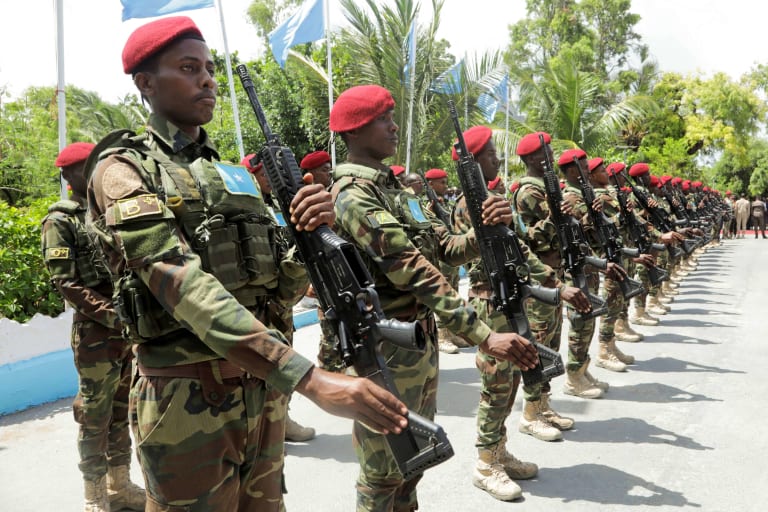
The proposed strength of the Somali National Army, ranging between 150,000 and 200,000 personnel, is an achievable goal within two decades, provided the country is guided by visionary and patriotic leadership that places national defense and self-reliance among its highest priorities. Somalia cannot afford to continue on its current path of dependence on foreign military forces to safeguard its sovereignty and territorial integrity.
Without doubt, Somalia is approaching a critical crossroads in terms of its national security. The African Union peacekeeping forces are expected to begin withdrawing their personnel towards the end of next year, a development that could create a significant security vacuum. Regrettably, the Somali National Army is not yet sufficiently prepared to fill this gap due to persistent shortcomings in firepower, military equipment, institutional structure, and operational capabilities.
Somalia is also facing various forms of external pressure and interference from several regional actors seeking to undermine its unity and territorial integrity by encouraging fragmentation.
A notable example is the Israeli government’s recognition of Somaliland in December 2025, a move that challenges Somalia’s sovereignty and territorial integrity. Somaliland remains an integral and inseparable part of the internationally recognized territory of the Federal Republic of Somalia.
The Federal Government of Somalia should establish a long-term national defense strategy that clearly defines security priorities, military requirements, international partnerships, and financial commitments. Somalia must aspire to protect its territory, secure its maritime resources, defend its airspace, and safeguard its citizens. National sovereignty must not remain merely a constitutional principle or political declaration; it must be supported by credible national institutions capable of exercising effective authority across the country’s internationally recognized territory.