The European Union is set to implement a new set of rules Friday governing how each of its 27 member states will deal with irregular migration and asylum-seekers.
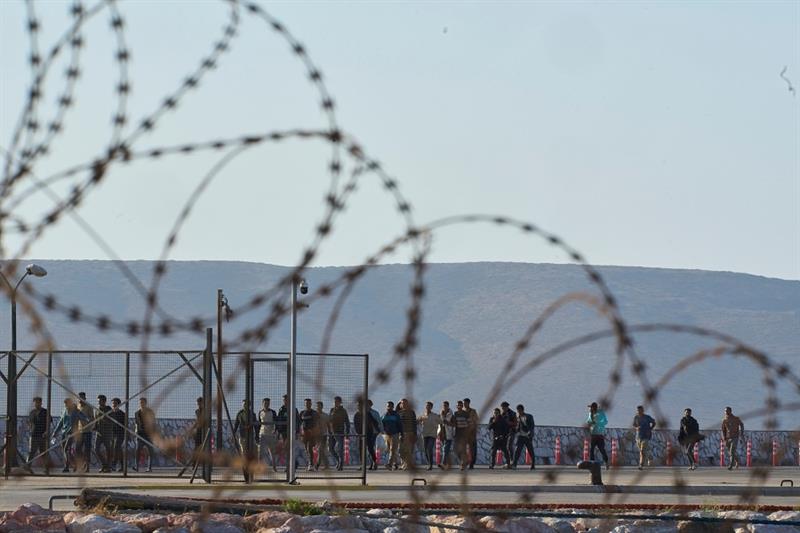
The European Migration and Asylum Pact is the culmination of years of grueling negotiations that overhauled the previous system, which was widely considered a failure and gave far-right parties a potent issue to win votes.
All EU members were meant to be prepared for Friday’s implementation by adapting laws, training staff and beefing up border infrastructure. But even the European Commission admits no member is completely ready.
European Commissioner for Migration Magnus Brunner hailed the pact as a milestone but noted “it is only the beginning and not the end.”
Human rights advocates warn the pact could add to the difficulties asylum-seekers face while trying to find safe haven in the EU.
Here is what to know:
Screening and fast-tracking border procedures
Under the new rules, foreigners will be screened at EU borders for up to seven days before they are admitted in line with a common procedure.
“The pact turns 27 different ways of doing things into one,” said Hans Leijtens, exececutive director of Europe’s border security and coast guard agency Frontex.
Asylum-seekers deemed to pose a “security threat” or from countries listed as “safe” by the EU will go through faster asylum procedures of three months instead of six. Some applicants may be kept at the border while their cases are processed. They will be given only one chance to appeal a rejected application.
The European Commission says some member states still need to implement a new biometric database called Eurodac that will register and store information of adults and children as young as 6.
Many more countries need to set up border facilities to handle screening, asylum processing and detentions. Work also is needed to ensure there is independent rights monitoring at the border, the commission said.
Swiftly returning rejected asylum-seekers
One of the pillars of the new pact is to speed up voluntary and forced returns of rejected asylum-seekers by automatically issuing return orders when an application is rejected. A clear political priority of the center and far-right politicians who swept to power in 2024 across the EU is that returnees are slated to be sent to countries deemed safe like Syria and Bangladesh.
The European Agency for Asylum said there were about 802,000 pending first-time asylum applications in March.
Member states also are working with EU lawmakers to allow for the creation of “return hubs” in third countries where they can send migrants who can’t be repatriated. Questions about deportation centers are being quietly negotiated between a group of five nations and potential partners abroad.
Sharing the burden between member nations
Among the most contentious issues that has divided EU countries was sharing responsibility for asylum-seekers, especially in times of crisis. Because migrants must apply for asylum in the first EU country they enter, front-line countries along the Mediterranean like Greece and Italy have long complained they bear the weight of irregular arrivals.
Citing their inability to cope under pressure, these countries allowed passage of many migrants to northern and western Europe without permission. This shifted some of the burden onto northern countries like Germany and Sweden that saw asylum applications soar to record levels, bringing their migration systems to the brink of collapse.
The new pact includes a solidarity mechanism to ensure border countries aren’t left on their own. Other EU members will either take in a share of asylum-seekers or offer financial support to compensate. Countries can also offset their share if they receive migrants through secondary movements, meaning when a migrant arrives in one country and moves on to another.
Not all member states were happy with the solution. Poland continues to suspend the right to asylum, citing the weaponization of migration on its border with Belarus. Hungary’s new prime minister, Péter Magyar, is continuing many of the hard-line immigration policies of his predecessor, Viktor Orbán, including a refusal to accept migrants.
Pact will not bring immediate change
The commission has acknowledged work on implementing the pact will continue after June 12 since no country is fully ready.
“It won’t be a like a light switch turning on June 12,” said Susan Fratzke, a senior policy analyst with the Migration Policy Institute. “Some of these things will take time.”
The lack of clarity and consistency is problematic, said Susanna Zanfrini, director of the International Rescue Committee’s Italy office.
That ambiguity “creates uncertainty for both people seeking protection and the organizations supporting them at the very moment they most need clear information about their rights, options, and access to support to survive, recover and rebuild their lives,” she said.
Human rights groups cry foul
Human rights advocates have criticized the new rules, arguing they undermine the right to seek asylum by rushing assessments.
They say accelerated procedures introduce racial profiling while denying international protection to applicants with legitimate claims, and they warn of an expected spike in prolonged detentions at EU borders.
Judith Sunderland, senior refugee and migrant rights adviser at Human Rights Watch, said the new pact “slams the door in the face of people who deserve to be treated with dignity and to have a fair hearing of their claims for protection.”
Lukas Gehrke, the Brussels chief for the International Organization For Migration, said that while the EU ramps up deportations, it should also provide more, not less, funding for integration programs for the millions legally allowed to stay in the bloc.
Source: Al Ahram Online