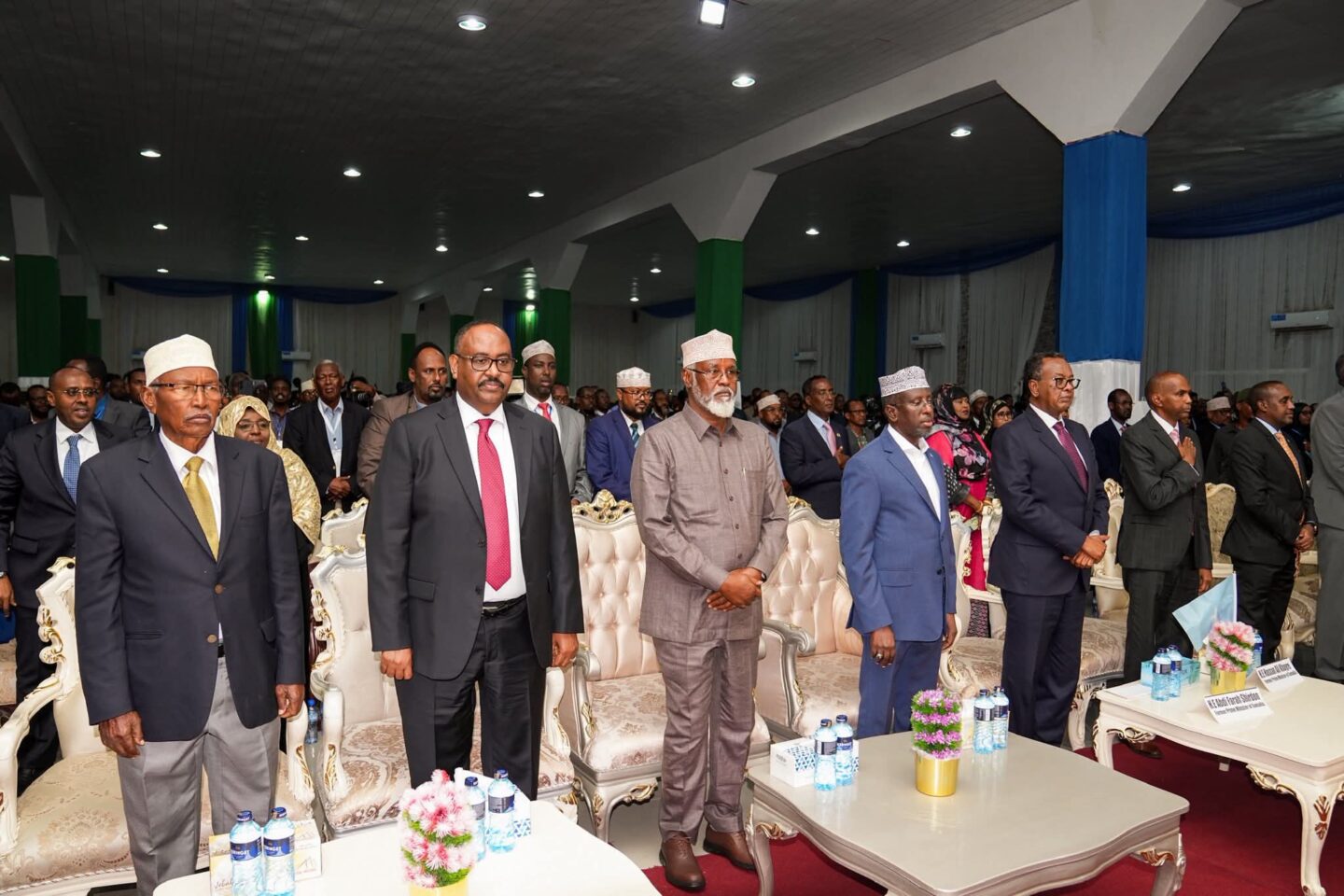
Kismaayo (PP Editorial) — The summit concluded in Kismaayo yesterday under the auspices of the Council of Somali Salvation was fundamentally different from the conference held in Garowe in 2021, which brought together members of a different political alliance. The Garowe conference was convened after the mandate of the previous Federal Government of Somalia expired in February 2021. By contrast, the Kismaayo summit took place while the incumbent government in Mogadishu still has five months remaining before the end of its mandate.
The Council of Somali Salvation is calling for a consensus-based electoral model, in opposition to the one-person, one-vote system proposed by the Federal Government of Somalia. The federal system itself marked its twenty-first anniversary in October; its implementation has entrenched federalism across the country, as shown by the establishment of Federal Member States.
Puntland, which has historically positioned itself as a leading proponent of federalism since 1998, when it was founded as a pro-union, anti-centralist administration, now appears to be punching below its political weight due to misplaced priorities. Senator Abdirahman Farole, the former President of Puntland State, has accused the Federal Government of Somalia of withholding funds allocated to Puntland State. This raises a critical question: why was Senator Farole unable to raise these concerns in Mogadishu, instead choosing to frame them in Kismaayo in language aimed to fuel anti-Somalia sentiment?
In 2023, President Said Abdullahi Deni of Puntland State severed ties with the Federal Government of Somalia, a decision that has significantly contributed to Puntland’s political isolation over the past two years. Senator Farole has invoked the Garowe I and Garowe II principles without acknowledging the accompanying obligations placed on Puntland, including financial reporting of its revenues to the Financial Governance Committee of Somalia. Puntland is widely believed to generate income, among other sources, from fishing licences issued to foreign trawlers. The Financial Governance Committee has repeatedly urged Puntland to harmonise its fishing licence regime with those of other Federal Member States.
Even if, for the sake of argument, Somalia’s federal system has resulted in excessive concentration of power in Mogadishu, pushing for a change of administration through indirect elections suggests that Puntland’s political elite are prioritising personal interests over the collective welfare of the Puntland population. In 2023, President Deni opposed the continued political representation of the Somaliland administration within federal institutions, despite Somaliland’s long-standing claim of secession from Somalia. The attempted leasing of a naval base in northern Somalia to Ethiopia by the secessionist Somaliland administration in January 2024 appeared to vindicate President Deni’s earlier position.
The silver lining of the Kismaayo summit lies in the participation of SINCAD in the local government elections in Mogadishu. This development demonstrates that Puntland is not wholly a monolithic, one-man–ruled sub-national entity. Moreover, despite a series of avoidable political miscalculations, President Deni has made a notable contribution to raising standards in Somalia’s national political discourse. He will need to take political setbacks less personally and work towards building alliances grounded in shared political values, particularly accountability at all levels of governance.
© Puntland Post, 2025