“When the rich rob the poor, it’s called business. When the poor fight back, it’s called violence.”
— Anonymous
Introduction
Somalia is confronting a severe and increasingly untenable cost-of-living crisis, driven in large part by electricity tariffs that rank among the highest in Africa—and, by several estimates, the highest in the world. For millions of ordinary Somalis, access to electricity is no longer merely a matter of convenience or modern comfort; it has become an indispensable yet prohibitively expensive necessity that places immense strain on already fragile households.
In a nation grappling with widespread poverty, chronic unemployment, internal displacement, and economic insecurity, soaring electricity costs impose an acute burden on families struggling to secure their most basic needs. Rather than functioning as an essential public utility that underpins economic development and elevates living standards, electricity has increasingly become a luxury commodity beyond the reach of the average citizen.
According to UNDP poverty indicators, nearly 70 per cent of Somalis have historically lived below the international extreme-poverty threshold of US$1.90 per day. Although poverty estimates and international poverty thresholds have since evolved, the underlying reality remains deeply concerning: a substantial proportion of the population survives on extremely limited incomes.
Against this background, how can a family living on such a limited income afford electricity costing between US$0.40 and US$0.90 per kilowatt-hour, while simultaneously paying for food, water, rent, education and healthcare?
This is not merely an economic question. It is a question of social justice, responsible governance and the fundamental responsibility of the state towards its citizens.
1. Market Concentration and the Absence of Effective Competition
A primary structural driver of Somalia’s electricity crisis is its highly concentrated, vertically integrated market architecture. Following the collapse of the Somali state in 1991, private entrepreneurs stepped into the institutional vacuum to restore power generation and distribution. Their resilience and capital investment deserve recognition; without private-sector initiative, major Somali urban centers might have remained without reliable electricity for decades.
However, what originated as a vital private-sector stopgap has gradually calcified into an oligopolistic market dominated by entrenched providers, minimal competition, and weak public oversight. In Mogadishu, for example, the Banadir Electricity Company (BECO) has historically commanded approximately 85 per cent of the market, while a smaller number of operators—such as Mogadishu Power Supply and Blue Sky Energy—serve specific districts of the capital.
The core issue is not private ownership itself, as private enterprise can drive efficiency and innovation in energy infrastructure. Rather, the failure lies in allowing private providers to operate without meaningful competition, transparent pricing mechanisms, or independent regulatory supervision. In well-functioning energy markets, competitive pressure compels firms to optimize operations, reduce waste, and pass cost savings on to consumers. Somalia’s electricity sector lacks these safeguards. Because operators are vertically integrated—controlling generation, transmission, and distribution within isolated grids—new entrants face steep barriers to entry, urban networks suffer from costly infrastructure duplication, and economies of scale remain unrealized. A World Bank-supported assessment of the sector has specifically underscored how fragmented distribution networks and duplicated infrastructure inflate operational inefficiencies. Left without viable alternatives, ordinary consumers have little choice but to accept unilateral tariffs set by local monopolies, raising an urgent question: who protects the Somali consumer?
2. Domestic Tariff Disparities Across Somali Cities
While electricity costs vary across regions, providers, and consumption tiers, empirical data reveal a nationwide affordability crisis. According to a 2026 comparative price assessment by the Somali Researchers Association (SRA), indicative residential tariffs across major Somali cities stood at alarming levels even prior to late-2026 price hikes:
| City | Indicative Electricity Tariff (US$/kWh) |
| Mogadishu | $0.46 |
| Hargeisa | $0.55 |
| Garowe | $0.59 |
| Kismayo | $0.79 |
| Baydhabo | $0.90 |
| Bosaso | $0.65 |
| Beledweyne | $1.20 World Bank report |
| Dusamareeb | $0.65 – $1.15 World Bank report |
| Luuq | $0.50 – $0.90 Published 2023-2025 |
| Jowhar | $0.45 – $0.60 World Bank report |
| Marka | $0.70 World Bank report |
Although these figures represent market estimates rather than an exhaustive national tariff audit, they preceded a significant upward adjustment in the capital. On 25 October 2026, Mogadishu’s three principal providers implemented a uniform US$0.05 per kWh rate increase, citing rising global fuel costs:
- Mogadishu Power Supply: Increased from US0.38 per kWh.
- Banadir Electricity Company (BECO): Increased from US 0.46 per kWh.
- Blue Sky Energy: Increased from US0.46 per kWh.
This October tariff hike illustrates the acute vulnerability of Somali households to fluctuations in global fuel prices and providers’ operating margins. Meanwhile, regional capitals face even steeper costs: tariffs in Kismayo and Baydhabo approach or exceed US$0.80 per kWh, and establishing independently verified, transparent tariff benchmarks for commercial hubs such as Bosaso remains an urgent priority. Across virtually the entire country, electricity remains priced far beyond the purchasing power of ordinary citizens.
3. Regional Comparisons: Somalia and Its Neighbors
The severity of Somalia’s energy crisis becomes even more pronounced when benchmarked against neighboring East African economies. According to July 2026 comparative data compiled by the Somali Researchers Association, indicative residential tariffs across the region demonstrate a staggering disparity:
| Country & City | Approximate Household Tariff (US$/kWh) |
| Somalia — Mogadishu | $0.41 (pre-October 2026 hike) |
| Kenya — Nairobi | $0.16 |
| Ethiopia — Addis Ababa | $0.024 |
Even accounting for cross-border variations in consumption brackets, state subsidies, and taxation structures, the gap is extraordinary. Electricity in Mogadishu costs roughly 2.6 times more than in Nairobi and approximately 17 times more than in Addis Ababa.
This disparity poses a critical macroeconomic question: why does a nation endowed with world-class solar and wind resources endure some of the highest energy costs in the region? The consequences extend far beyond household budgets. Punitive electricity tariffs inflate business overhead, deter domestic and foreign industrial investment, erode the price competitiveness of Somali goods, and stifle local manufacturing. Small enterprises, hospitals, pharmacies, schools, and hospitality businesses all rely on affordable power to operate. Somalia cannot realistically pursue industrialization, economic diversification, or sustainable growth while its productive sectors pay energy costs several multiples higher than those of regional competitors.
4. Energy Poverty and the Plight of Somali Households
Energy poverty—defined not merely as the absence of physical grid connections, but as the inability of households to afford sufficient, reliable energy for essential daily needs—is a critical yet underexamined dimension of Somalia’s broader humanitarian and economic crisis.
For low-income families, electricity bills compete directly with other non-negotiable household expenditures, including:
- Staple foods and basic household provisions;
- Clean drinking water and sanitation services;
- Residential rent;
- Formal schooling and religious instruction, including Quranic education;
- Healthcare, diagnostics, and essential medications;
- Daily transportation.
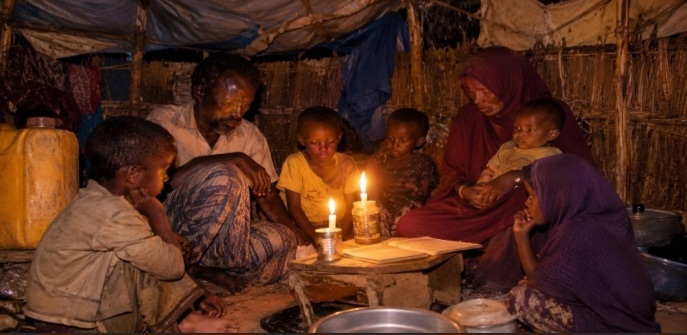
Because public social services in Somalia remain severely underfunded, the financial burden of education, healthcare, and utilities falls overwhelmingly on private household incomes. The cumulative pressure is devastating. Confronted with escalating electricity bills, impoverished families are forced into painful trade-offs: reducing daily food intake, withdrawing children from school, delaying vital medical care, or relocating to precarious, substandard housing.
These pressures fall disproportionately on internally displaced persons (IDPs), unemployed youth, female-headed households, and communities recovering from recurrent climate shocks and insecurity. Increasingly, economic desperation driven by the soaring cost of electricity, water, food, and shelter is compounding the drivers of displacement. Some vulnerable families have even sought refuge across the border in Jigjiga, Somali Region of Ethiopia and Kenya, including in the Dadaab refugee complex (such as the Hagardera and Dagahaley camps). While cross-border displacement stems from a complex interplay of conflict, drought, unemployment, and institutional fragility, prohibitive utility costs add an intolerable layer of hardship—evoking painful memories of the mass displacement that followed the state collapse of 1991. No Somali family should be driven from its home because the basic cost of survival has become unaffordable.
5. The Paradox of Untapped Renewable Energy Potential
Perhaps the most striking paradox of Somalia’s electricity crisis is that the country possesses some of the richest renewable energy endowments on the continent. Receiving an average of 6 to 8 kilowatt-hours of solar irradiation per square meter per day across much of its territory, Somalia is geographically positioned to be a premier solar power producer in the Horn of Africa. Complementing this solar abundance is substantial wind-energy potential along Somalia’s expansive coastline and key inland corridors.
These natural advantages offer immense potential for scalable, clean energy infrastructure, including:
- Utility-scale solar photovoltaic farms;
- Onshore and coastal wind-energy installations;
- Decentralized, solar-powered mini-grids for rural and off-grid communities;
- Hybrid solar-battery storage systems that stabilize supply and reduce peak-load costs.
Despite these endowments, Somalia’s power sector remains overwhelmingly reliant on imported diesel generators. Diesel-based generation is inherently costly and exposes both utilities and consumers to global oil-market volatility, maritime freight expenses, and foreign-exchange pressures. In its 2025 Energy Transition Assessment: Somalia, the International Renewable Energy Agency (IRENA) underscored that heavy diesel dependence, operational inefficiencies, and market concentration are primary drivers of the country’s punitive electricity tariffs. Continuing to rely on expensive imported fossil fuels amid year-round sunshine and coastal winds represents not merely an environmental contradiction, but a profound economic and policy failure.
6. Regulatory Failure and the Implementation Gap
At the core of Somalia’s electricity crisis lies the weakness of public institutions mandated to regulate the sector. In modern economies, electricity is recognized as an essential public utility requiring robust state oversight, irrespective of whether generation and distribution are privately or publicly operated. Governments need not own power companies to protect the public interest; rather, they must enforce clear rules, prevent monopolistic abuse, and guarantee fair, transparent pricing through two complementary pillars:
- Fostering Genuine Market Competition: Opening the sector to qualified investors, dismantling arbitrary barriers to entry, ensuring fair access to grid infrastructure, and preventing dominant incumbents from stifling competition.
- Enforcing Independent Utility Regulation: Where natural monopolies persist, empowering independent regulators to audit utility operating costs, establish transparent tariff-setting methodologies, veto unjustified rate hikes, enforce service-quality standards, and penalize anti-competitive conduct.
Advocating for effective regulation is neither anti-business nor a call for state overreach; it is a foundational responsibility of modern governance. Private enterprises are entitled to earn reasonable returns on capital, but when they supply essential utilities to captive consumers, profitability cannot come at the expense of human dignity and public welfare.
While the Federal Government enacted the Electricity Act in 2023, establishing a statutory framework for the sector and mandating the creation of the National Electricity Authority (NEA)—legislation on paper does not automatically translate into consumer protection. A 2025 World Bank assessment highlighted persistent institutional bottlenecks, including limited technical and financial capacity within the NEA, delays in enacting secondary regulations, and weak coordination between federal and state-level authorities. Somalia’s immediate challenge is therefore not a lack of laws, but a failure of execution. Without a well-funded, technically proficient, and genuinely independent regulator, progressive legislation will remain largely symbolic.
7. The Broader Cost-of-Living Crisis and Political Priorities
Somalia’s electricity crisis cannot be divorced from a wider governance deficit in the delivery of essential public services. Having endured decades of conflict, political instability, climate shocks, and institutional fragility, ordinary Somalis now confront simultaneous price pressures across food, housing, water, and energy, without the buffer of formal state social-protection programs.
In many developing and middle-income nations, governments cushion vulnerable populations through targeted utility subsidies, lifeline tariffs, and strict price oversight. In Somalia, by contrast, citizens bear the full brunt of market failures alone. This reality invites legitimate scrutiny of national political priorities. At a time when millions struggle to afford basic survival, elite political discourse remains disproportionately consumed by electoral disputes, cabinet appointments, constitutional disagreements, and struggles over executive mandates.
While political competition and constitutional reform are vital elements of state-building, they must never eclipse the primary purpose of government: safeguarding the welfare of citizens, delivering essential public goods, and fostering broad-based economic opportunity. A government’s legitimacy cannot be measured solely by its political survival or electoral victories; it must ultimately be judged by the material well-being and dignity of the people it governs.
8. Policy Recommendations for Federal and State Authorities
Resolving Somalia’s electricity crisis requires a coordinated national energy strategy backed by political will, institutional reform, and targeted investment. The Federal Government and Federal Member States should prioritize ten concrete interventions:
- Fully Operationalize the National Electricity Authority (NEA): Provide the NEA with dedicated budgetary resources, specialized technical personnel, and statutory independence to enforce national tariff regulations and sector standards.
- Mandate Transparent Tariff-Setting Frameworks: Require electricity providers to submit audited disclosures of generation costs, fuel expenditures, operational overhead, and profit margins prior to approving any tariff adjustments, ensuring fair investor returns without price gouging.
- Dismantle Monopolies and Promote Fair Competition: Eliminate barriers to market entry through transparent licensing, open-access grid policies, and anti-trust enforcement so no single provider can dominate urban markets unchallenged.
- Accelerate Utility-Scale Solar and Wind Investment: Establish renewable energy as a national economic priority by offering de-risking mechanisms, streamlined permitting, and blended-finance incentives to attract domestic and international clean-energy investors.
- Introduce Targeted “Lifeline” Subsidies: Implement tiered lifeline tariffs that provide a baseline allocation of affordable electricity to verified low-income households, internally displaced persons, and female-headed families without distorting broader market pricing.
- Develop Interconnected Grid Infrastructure: Coordinate infrastructure planning among federal authorities, regional states, and private utilities to eliminate costly network duplication and build interconnected regional grids capable of achieving economies of scale.
- Strengthen Federal–State Regulatory Alignment: Harmonize licensing, technical standards, and consumer-protection rules between the Federal Government and Federal Member States to prevent regulatory fragmentation and regional tariff disparities.
- Expand Decentralized Rural Electrification: Partner with development finance institutions and private developers to deploy solar-powered mini-grids in rural and agricultural communities, supporting local healthcare, education, water pumping, and agro-processing.
- Enforce Robust Consumer Protection Standards: Mandate standardized, itemized billing, certified accurate metering, accessible dispute-resolution mechanisms, and strict prohibitions against arbitrary tariff increases.
- Execute a Long-Term National Energy Transition Plan: Adopt a binding roadmap with measurable milestones to phase down imported diesel generation, scale renewable capacity, expand national grid access, and align Somali electricity tariffs with regional benchmarks.
Conclusion: Electricity Is a Necessity, Not a Luxury
No country can achieve sustainable development, industrialize its economy or improve its people’s living standards without sufficient, reliable and affordable energy. More than a century ago, Vladimir Lenin recognized this fundamental reality. Following the 1917 Russian Revolution, he famously declared in 1920:
“Communism is Soviet power plus the electrification of the whole country, because without electrification it is impossible to develop industry.”
This vision led to the establishment of the GOELRO Plan, Russia’s ambitious national electrification program, adopted in December 1920.
More than a century later, this lesson remains relevant to Somalia. Despite its enormous solar and wind-energy potential, Somalia continues to suffer from extremely high electricity prices, leaving millions of people struggling to afford this essential service. Energy poverty is not merely a social challenge; it is a major obstacle to industrialization, economic growth and national development.
Somalia’s punitive electricity tariffs are far more than a commercial anomaly; they represent an acute developmental and humanitarian emergency with direct consequences for poverty reduction, economic recovery, social stability, and human dignity. No nation can realistically aspire to sustainable prosperity while its citizens are priced out of one of the most fundamental requirements of modern life.
Somalia possesses extraordinary natural assets—abundant year-round sunshine, rich coastal winds, a strategic geographic location, and a resilient, entrepreneurial private sector. What has been missing is decisive public leadership, effective market regulation, and strategic investment in clean energy. While private companies should be encouraged to innovate, expand infrastructure, and earn fair profits, essential public utilities cannot be left entirely to unregulated market forces where competition is weak and consumers lack alternatives.
The policy imperative is unambiguous: Somalia must cultivate a genuinely competitive energy market while empowering an independent regulator capable of curbing excessive tariffs and safeguarding consumers. Federal and regional leaders can no longer treat affordable power as a peripheral concern best left to private operators; it is a core national responsibility demanding urgent, coordinated action.
Ultimately, the measure of any government does not lie in how long its leaders retain power, how many political offices they distribute, or how deftly they navigate elite bargains. It lies in whether ordinary families can afford food, clean water, healthcare, education, shelter, and electricity. Energy is not a luxury reserved for the privileged few; it is a foundational necessity for human dignity, industrial growth, and national progress.
May Allah ease the burdens of the Somali people, uplift vulnerable families, and guide the nation’s leaders toward justice, integrity, and genuine service to the public.