“The object of government is the welfare of people.” – Theodore Roosevelt
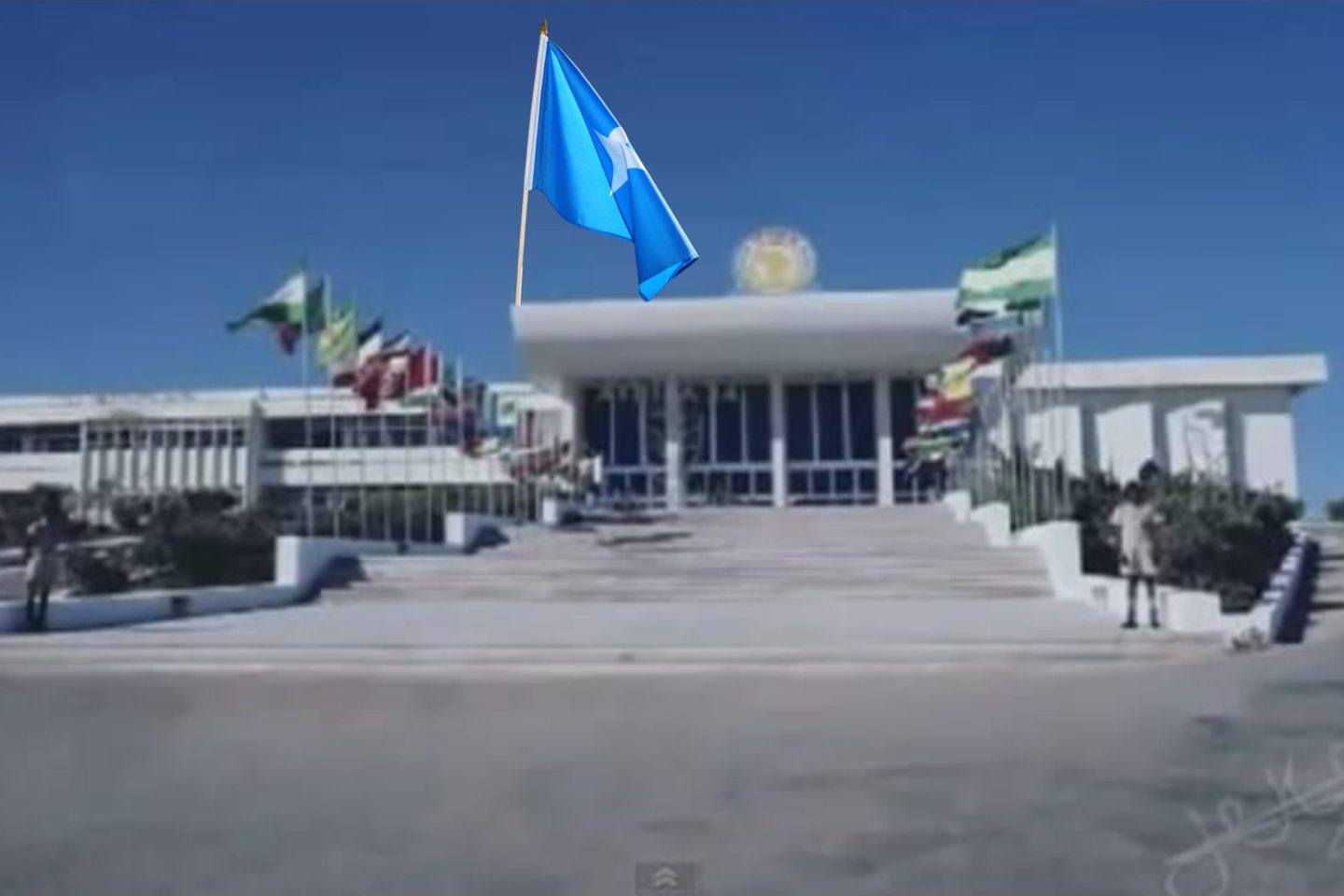
Somalia’s greatest tragedy is not simply that it has experienced war, poverty and institutional collapse. It is that, after decades of state-building efforts, the country continues to struggle to establish a political system in which competence, integrity, national interest and public service consistently take precedence over personal, clan and factional interests.
One useful concept for understanding this problem is kakistocracy, derived from the Greek kakistos, meaning “worst”. In political thought, kakistocracy refers to government by people perceived to be among the least suitable or least competent to govern. It does not mean that every individual in government is incompetent or corrupt. Rather, it describes a political environment in which the system repeatedly rewards patronage, loyalty, opportunism and narrow interests instead of competence, integrity and national responsibility.
This concept provides a useful lens through which to examine Somalia’s prolonged state-building difficulties.
Somalia’s unfinished state-building project
Somalia became independent in 1960 with considerable advantages: a largely shared language, religion, culture and historical identity. Yet the promise of independence was followed by authoritarian rule, military government, state collapse, civil war and decades of institutional fragmentation.
Today, Somalia has a federal government, federal member states, a parliament, security institutions and an increasingly developed public administration. There have also been important achievements in public financial management, banking regulation, revenue mobilization and the development of national institutions. These achievements should not be ignored.
Nevertheless, the foundations remain fragile.
Somalia continues to face serious problems of corruption, insecurity, poverty, weak institutions, political fragmentation and limited state capacity. The 2024 Corruption Perceptions Index gave Somalia a score of only 9 out of 100, placing it among the lowest-ranked countries measured.
The country’s first Multidimensional Poverty Index, released in 2025, found that 67 percent of Somalis were multidimensionally poor, demonstrating that the consequences of weak governance are ultimately experienced by ordinary citizens through inadequate education, health services, infrastructure, employment and living standards.
The central question, therefore, is not simply why Somalia is poor. It is why the country has found it so difficult to transform political authority into effective institutions capable of delivering public goods.
Constitutional disagreement and the federal question
The Constitution should be the social contract that establishes the rules of the political game. Unfortunately, Somalia’s constitutional journey has itself become a source of political disagreement.
In March 2026, the Federal Parliament approved the final set of constitutional amendments after more than fourteen years of review, and the amendments were formally signed into law on 8 March 2026. However, the process generated significant disagreement among political actors and some Federal Member States.
This illustrates a deeper problem: a constitution cannot create political stability merely by being adopted. It must also be accepted as legitimate by the major political communities and institutions that are expected to operate under it.
Questions concerning the division of powers between the Federal Government and Federal Member States, natural resources, taxation, security, elections and political representation remain deeply consequential. Analysts have identified unresolved disagreements over responsibilities and resource-sharing as important obstacles to political cohesion.
Federalism was introduced partly to accommodate Somalia’s political and social realities. Yet federalism becomes counterproductive when the centre and the states regard each other primarily as competitors rather than as different levels of one sovereign state.
The objective should therefore be cooperative federalism, in which the Federal Government and Federal Member States have clearly defined constitutional responsibilities while working together on matters of national importance.
Elections: democracy or another arena for political competition?
Elections should provide citizens with a peaceful mechanism for choosing their leaders. In Somalia, however, electoral arrangements have repeatedly become a source of political confrontation.
The transition towards universal suffrage is an important democratic objective, but disagreement over electoral rules, constitutional authority and the relationship between federal and state elections has created considerable tension. International assessments have noted uncertainty surrounding the timing and modality of Somalia’s national elections.
The challenge is therefore not simply whether Somalia should hold elections. The more fundamental question is whether elections can be conducted through credible, transparent and mutually accepted rules.
An election in which the losing side immediately rejects the legitimacy of the process cannot provide a durable foundation for state-building. Somalia needs electoral institutions that are stronger than individual politicians and electoral laws that are accepted before the competition begins.
Resources, corruption and the national interest
Resource-sharing is another major test of Somali state-building.
Oil, gas, fisheries, ports, taxation, customs revenue, international assistance and other national resources should ultimately serve the Somali public. Where ownership and distribution are unclear, resources can become sources of political competition rather than engines of development.
Corruption makes this problem worse. Where procurement, appointments, contracts and public revenues are not sufficiently transparent, citizens lose confidence in government and political office can become an avenue for private enrichment.
Somalia has nevertheless begun building mechanisms intended to improve financial accountability. The Audit Law enacted in 2023 strengthened the legal framework for auditing public resources at federal and state levels, while subsequent reforms have sought to improve revenue collection and public financial management.
The challenge is implementation. A good law that is not enforced is little more than paper.
Somaliland and the unfinished question of national unity
The Somaliland question represents perhaps the most difficult expression of Somalia’s unresolved state-building crisis.
Somaliland’s authorities maintain that Somaliland is a sovereign state, while the Federal Government of Somalia maintains Somalia’s territorial unity and sovereignty. The disagreement has persisted for decades and cannot be solved through political rhetoric alone. The United Nations has historically supported dialogue between the relevant sides towards a negotiated relationship.
A sustainable approach requires patience, dialogue and recognition that national reconciliation cannot be achieved simply by declaring victory over one another.
Somalia must demonstrate that a united state can provide security, justice, political participation, economic opportunity and accountable government to all its citizens. Unity is ultimately strengthened not only by constitutional arguments but by the quality of the state itself.
Why have other countries moved ahead?
Somalia should not assume that its difficulties are inevitable.
Several African countries that faced serious historical, geographical or institutional challenges have achieved considerably stronger development outcomes. Botswana, Mauritius and Ghana, for example, have been identified in comparative development research as countries that made significant progress through stronger institutions, governance and economic policies.
These countries are not perfect models, and Somalia cannot simply copy another country’s political system. Their experience nevertheless demonstrates an important principle:
Countries do not develop merely because they possess natural resources or receive foreign assistance. They develop when political leadership creates institutions that convert national resources into public benefit.
Leadership matters enormously. Botswana’s post-independence experience, for example, illustrates how political leaders can strengthen institutions rather than deliberately weaken them for personal survival.
This does not mean Somalia needs a particular form of government or a “strongman”. Indeed, authoritarian government can produce serious human-rights and institutional problems. But it does highlight a painful question: if a democratic system repeatedly produces leaders who prioritize political survival over national development, can it genuinely deliver the benefits that democracy is supposed to provide?
The answer should not be to abandon democracy. The answer should be to build a democracy in which competence, accountability and public service matter.
From kakistocracy to capable government
Somalia’s political problem cannot be solved merely by changing one president, prime minister, minister or parliament. The country requires a change in the incentives of the political system.
The following steps are essential.
First, establish constitutional consensus. The Federal Government, Federal Member States, political parties, traditional leaders, civil society, women and young people should have meaningful opportunities to discuss and resolve remaining constitutional questions. The constitution must become a national social contract rather than a document associated with one political administration.
Second, clarify federal responsibilities. The powers of the Federal Government and Federal Member States must be clearly defined, particularly regarding security, taxation, natural resources, foreign investment, ports and other strategic assets.
Third, establish transparent resource-sharing arrangements. Revenues from natural resources and major economic activities should be distributed according to a clear legal formula, publicly reported and independently audited.
Fourth, professionalize the civil service. Government employment should increasingly be based on qualifications, experience and performance. Somalia cannot build a modern state if political appointments consistently replace professional expertise.
Fifth, make corruption a serious political and legal offence. Anti-corruption institutions must have adequate independence, professional staff and the authority to investigate cases without political interference. Public officials should be required to disclose relevant assets and interests, while government procurement should be transparent.
Sixth, strengthen the judiciary. No state can survive when citizens believe that political connections are more powerful than law. An independent and competent judiciary is therefore fundamental to state-building.
Seventh, establish predictable electoral rules. The rules governing elections should be agreed before political competition begins. Electoral institutions must be sufficiently independent to give both winners and losers confidence in the process.
Eighth, invest in human development. Security and political reform alone will not save Somalia. Education, healthcare, water, roads, electricity, employment and social protection must become central measures of government performance.
Ninth, create a culture of national leadership. Somali politicians must gradually move from the question “What does my clan or political group receive?” towards the much larger question: “What does Somalia need?”
Finally, Somalia needs leadership based on competence and national responsibility. Leaders should be judged by what they build, not merely by what political coalition brought them to office.
Conclusion
The concept of kakistocracy should therefore be understood not simply as an insult directed at individual Somali politicians. It is a warning about a political system in which poor incentives can repeatedly elevate political loyalty above competence, accountability and national interest.
Somalia does not lack intelligent, educated and patriotic people. The country has many capable academics, civil servants, business people, diplomats, security professionals, religious scholars, women and young people. The fundamental challenge is creating institutions that allow capable people to serve the country and prevent public institutions from becoming instruments of private or factional interests.
Somalia has survived state collapse, civil war, terrorism, humanitarian crises and enormous political uncertainty. Survival, however, is not enough. The next stage must be transformation.
The country needs a political settlement based on constitutional consensus, cooperative federalism, accountable elections, transparent resource-sharing, professional institutions, justice and national reconciliation.
Perhaps the most important lesson is that a state is not built by the number of ministries it possesses, the number of politicians it elects or the number of international conferences it attends. A state is built when its citizens trust its institutions, its laws apply equally to the powerful and the weak, and its leaders understand that public office is a responsibility rather than a personal possession.
As the late Kofi Annan famously observed, “Good governance is perhaps the single most important factor in eradicating poverty and promoting development.”
And, in the words associated with the ancient principle of public service, “The measure of a government is not how many people it controls, but how well it serves its people.”
For Somalia, the choice before the country is ultimately between continuing a cycle of political fragmentation and institutional weakness, or building a state in which leadership, law and national resources serve the Somali people as a whole.
The country has already lost too much time. The task now is not merely to rebuild Somalia’s government, but to build a Somali state worthy of its people.