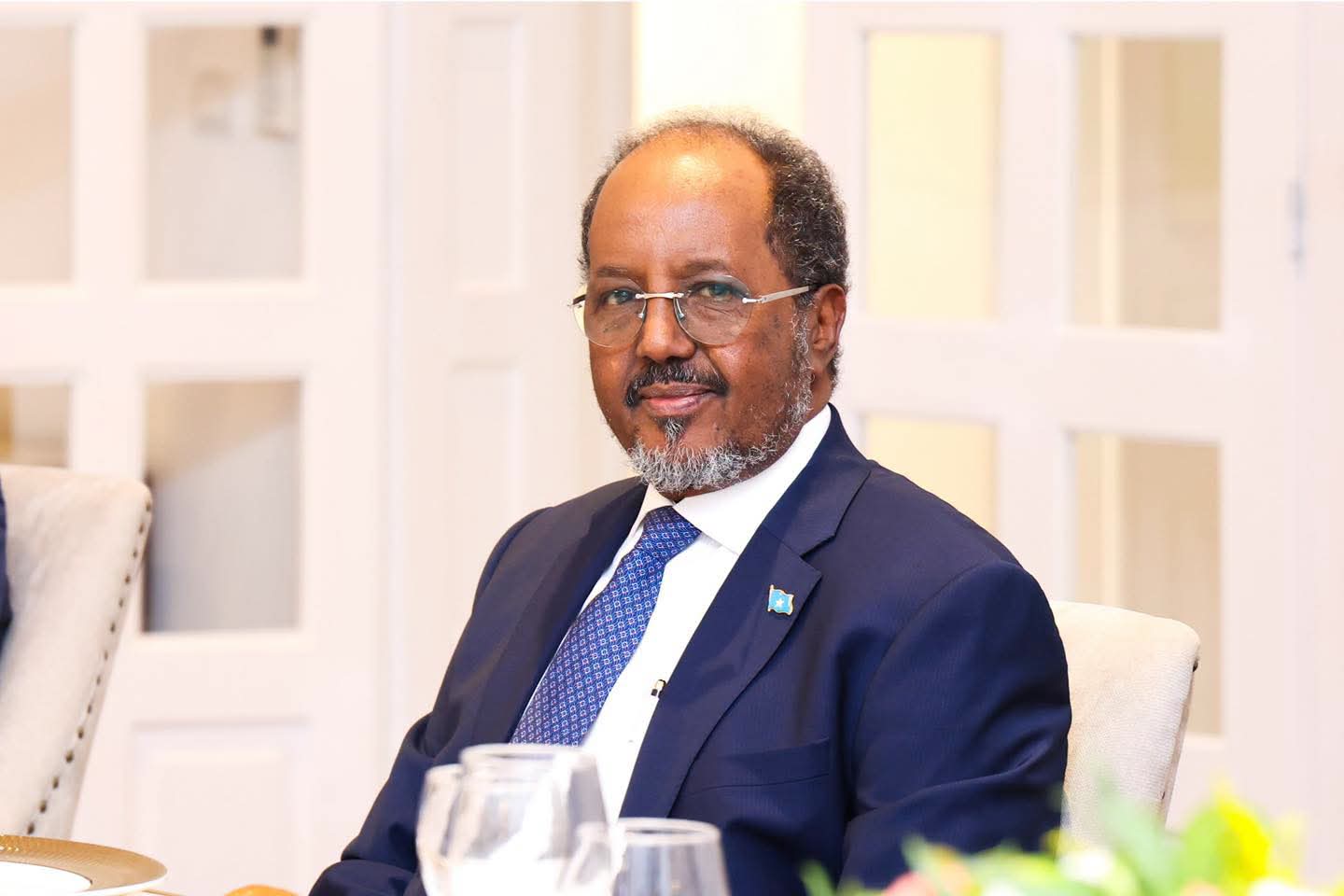
Garowe (PP Essay) — When the history of Somalia’s federal system is written, President Hassan Sheikh Mohamud and Senator Abdirahman Mohamed Farole will feature prominently. Since 2012, each leader has reshaped the federal system in different ways.
The year 2012 is an epochal moment in modern Somali political history. It marked the end of the Transitional Period (2000–2012) following the adoption of the Provisional Constitution, which incorporated the outcomes of the Garowe I and Garowe II constitutional conferences.
At the time, the political influence of Puntland State of Somalia largely determined how the Garowe conferences were conducted and concluded. Senator Abdirahman Farole, President of Puntland from 2009 to 2014, led the first pre-federal state, which had been established in 1998. The participation of Galmudug, then divided into three administrations: Ximan iyo Xeeb (based in Cadaado), Ahlu Sunna Wal Jama’a (based in Dhuusamareeb) and Galmudug proper (formerly based in South Galkayo), created the impression that the transition had effectively been negotiated between the Transitional Federal Government and two emerging federal entities. Hirshabelle, South West State and Jubaland had not yet been established, while the present-day Northeastern State formed part of Puntland.
The Provisional Constitution was heavily influenced by Puntland’s grievance-based federalist ideology. Puntland argued that federalism was the most suitable system for Somalia after the collapse of the Somali state in 1991. Two principal ideas underpinned this position. First was the belief that excessive centralisation had contributed to the collapse of the Somali state. Second was the deep mistrust that had characterised Somali politics before and after the civil war.
Puntland presented federalism as a compromise between the Somaliland administration’s pursuit of secession and the determination of political elites in Mogadishu to restore the highly centralised state that existed before 1991. Its arguments ultimately prevailed. The Provisional Constitution, particularly its provisions governing the formation of Federal Member States, reflected Puntland’s influence. Senator Farole successfully advocated for a constitutional requirement that a Federal Member State should ordinarily be formed from at least two regions.
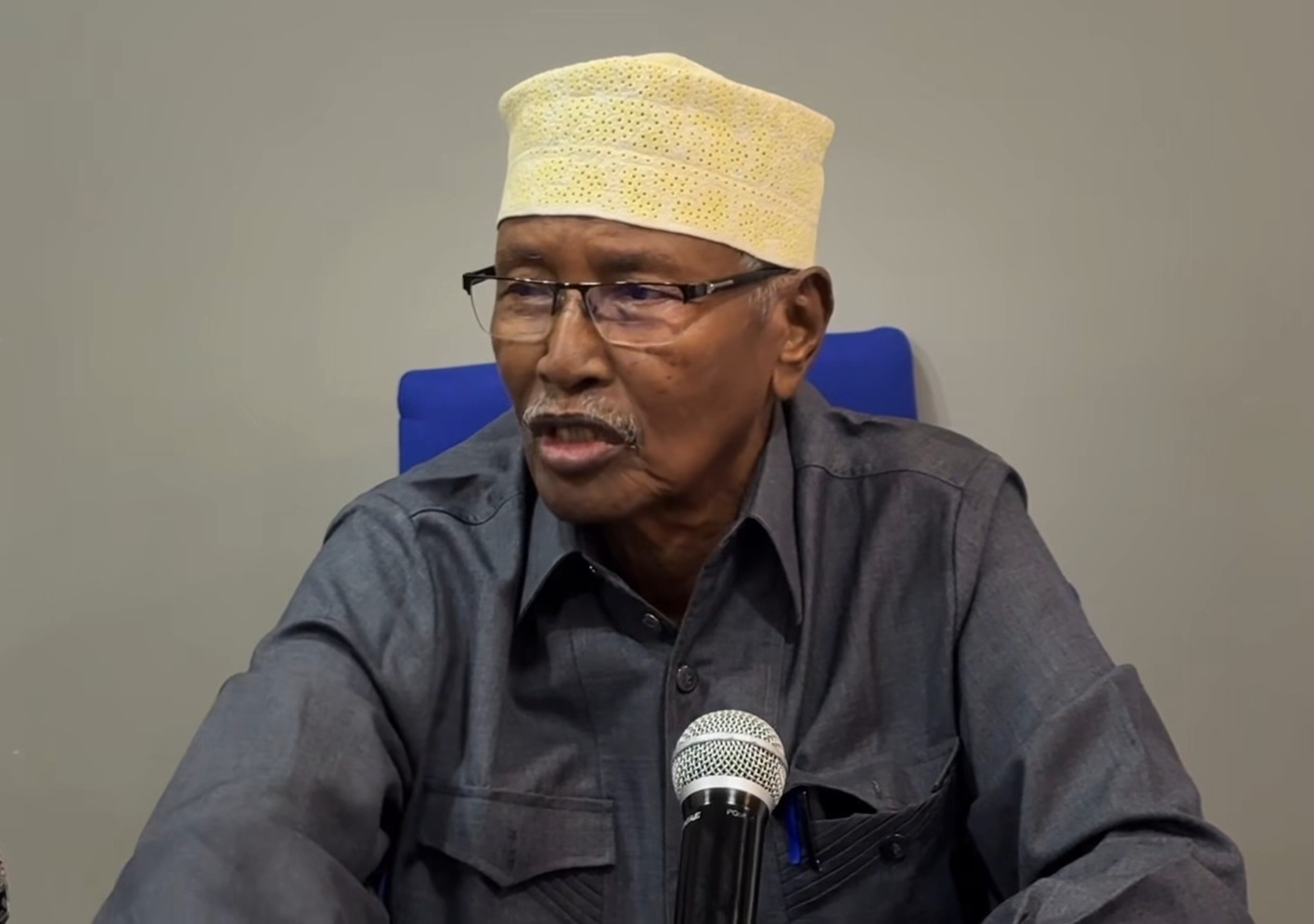
This provision favoured Puntland because it was already composed of two of Somalia’s eighteen pre-1991 regions, Bari and Nugaal, which are predominantly inhabited by Harti communities. However, Senator Farole appears to have overlooked the fact that Galmudug, despite being a signatory to the Garowe I and Garowe II declarations, did not satisfy the constitutional requirement, as it comprised Galgaduud and only part of Mudug Region.
During the final year of his presidency in 2013, Farole’s administration became embroiled in disputes with the Federal Government over the management of Somali public funds held in foreign banks and over alleged amendments to the Provisional Constitution after its adoption in 2012.
His successor, Dr Abdiweli Mohamed Ali, a former Prime Minister who had played a significant role in the Garowe 1 and 2 summits, initially opposed the expansion of Galmudug after President Hassan Sheikh Mohamud’s government incorporated Ahlu Sunna Wal Jama’a and Ximan iyo Xeeb into a unified Galmudug with Dhuusamareeb as its administrative capital.
During President Hassan Sheikh Mohamud’s first term (2012-2017), Jubaland, South West State and Hirshabelle were established. Following his return to office in 2022, his administration facilitated the formation of the Northeastern State of Somalia, with Laascaanood as its administrative capital.
Puntland used its status as the first functioning post-1991 administration and the principal advocate of federalism to bring the transitional period to an end in the expectation that the federal system would become firmly institutionalised. By contrast, President Hassan Sheikh Mohamud’s government relied on provisions of the Provisional Constitution that assign constitutional amendment powers to the bicameral legislature in order to reshape the federal framework.
Puntland’s political influence gradually diminished following the establishment of additional Federal Member States. Its failure to embrace fiscal federalism and to build durable political alliances with other Federal Member States weakened its capacity to counterbalance the growing influence of the Federal Government. Furthermore, Puntland’s own political system, based on the 2002 political settlement under which the presidency rotates among three principal Harti sub-clans while executive power remains heavily concentrated in the office of the incumbent President, weakened its moral authority to criticise centralisation elsewhere.
The Federal Government appears to have drawn lessons from Puntland’s own political experience, including the controversial constitutional amendments introduced in Puntland in 2023 and the local government elections held the same year while Puntland faced secessionist aggression from the Somaliland administration. In 2025, Somalia’s bicameral Federal Parliament amended provisions of the Provisional Constitution, followed by peaceful local government elections held in Mogadishu in December 2025.
Former Prime Minister Omar Abdirashid Ali Sharmarke recently observed in an interview that “Whenever Puntland believes it is losing influence, it suspends relations with the Federal Government of Somalia.” Former Foreign Minister Ahmed Isse Awad expressed a similar view. He noted that Puntland had declined to participate in the recruitment of 3,000 soldiers for the Somali National Army, a process that allows Garowe to retain overall command responsibility, reflecting concerns that the Federal Government might exercise excessive control over the armed forces. Awad also argued that Puntland had not fulfilled its constitutional obligation to contribute revenues to the Federal Government.
Between October 2004 and December 2008, when President Abdullahi Yusuf Ahmed resigned, Puntland provided significant financial support to the newly established federal institutions from its own limited domestic revenues, largely generated through customs duties. Against that historical background, President Said Abdullahi Deni’s current objection to the Federal Government paying monthly salaries directly to Danab Somali National Army forces stationed in Puntland appears to depart from the very principles of federalism that Puntland itself championed during the formation of the Federal Republic of Somalia.
© Puntland Post, 2026