Mogadishu reports that calm has been restored after violence between security forces and militias. But tones are heated
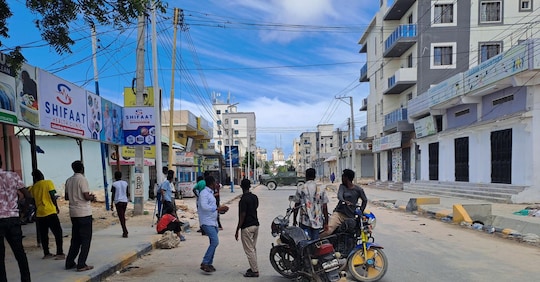
NAIROBI – Somalia’s authorities declared the restoration of order in the capital Mogadishu after clashes erupted between local security forces and opposition-linked militias on 3 and 4 June. The violence erupted ahead of protests expected last Thursday against the (at least) one-year extension of Hassan Sheikh Mohamud’s presidential term, an exemption that won parliamentary support in March and froze a planned vote later this year.
The elections were supposed to sanction the first national experiment of a vote free from the clan-based partitioning that has dominated Mogadishu’s parliament for decades. The postponement has unleashed the wrath of the opposition and re-fuelled tensions in a country already pervaded by fibrillations that include the jihadist Shabaab, the autonomist impulses of Somaliland and Puntland, and the more general web of tensions that dominates the Horn of Africa. The political chaos is taking place just a few months after the start of Turkish explorations of energy resources off the Somali coast, one of the pillars of Mogadishu’s plans to relaunch itself as an oil and diplomatic hub between Africa and South West Asia. The UN High Commissioner for Refugees has released a toll of 13 dead, 189 injured and 12,500 families forced to flee their homes.
The accusations against (and by) the opposition
The communiqué issued by the Somali authorities speaks of civilians ‘back to normal’, but the tone does not seem inclined towards appeasement. The government explicitly accuses two opposition leaders such as former prime minister Hassan Ali Khaire and former president Sheikh Sharif Sheikh Ahmed of having deployed ‘illegally armed groups’ and facilitated attacks against civilians, forcing the government to ‘respond accordingly’. Both protested in the opposite direction, denouncing the government forces’ aggression against the ‘peaceful’ demonstrations planned on 4 June and dissolved after the escalation.
Sources quoted by the Somali media report that Ahmed is still ‘stuck at a security checkpoint’ and that ‘negotiations with international support’ are taking place after those that have already foundered in recent days. The clashes that have broken out in the capital have elicited condemnations from the African Union, UN leader Antonio Guterres, and the US embassy in Mogadishu, raising the alarm threshold on a country already beset by several fronts of instability. Among the most obvious are the offensive of the al-Shabaab Qaedists and the push for independence by Somaliland, the autonomist state that claimed its independence from Mogadishu in 1991 and obtained Israel’s endorsement last December. The two crises intersect. ‘Any crisis benefits groups outside the system, like Al-Shabaab,’ explains Omar Mahmood of the International Crisis Group, a think tank. The escalation of tensions, Mahmood adds, ‘prevents other fundamental issues from being addressed, such as defining the status of Somaliland or resolving tensions within the federal system’.
Source: il sole 24 ore